
When a Failed Inspection Traces Back to the Guard
An OSHA citation for inadequate machine guarding rarely comes as a surprise to the people on the floor. It usually confirms something everyone already knew — the guards in place were fabricated to approximate the hazard, not engineered to eliminate it. For manufacturing facilities in Georgia, South Carolina, Alabama, and Tennessee, that gap between “something’s there” and “it’s built right” is where compliance failures live.
The problem isn’t always intent. It’s that machine guarding requires precision fabrication, not just metalwork. A guard that flex-fits around one press doesn’t transfer to a similar machine with a different infeed configuration. Off-the-shelf solutions cover the common cases. Custom fabrication covers the rest — and in most industrial environments, the rest is the majority.
What Custom Machine Guard Fabrication Actually Involves
Effective machine guarding starts with understanding the specific hazard — point of operation, power transmission, in-running nip points — and then fabricating a solution that physically prevents contact without interfering with production. That requires more than a welder and some tube steel.
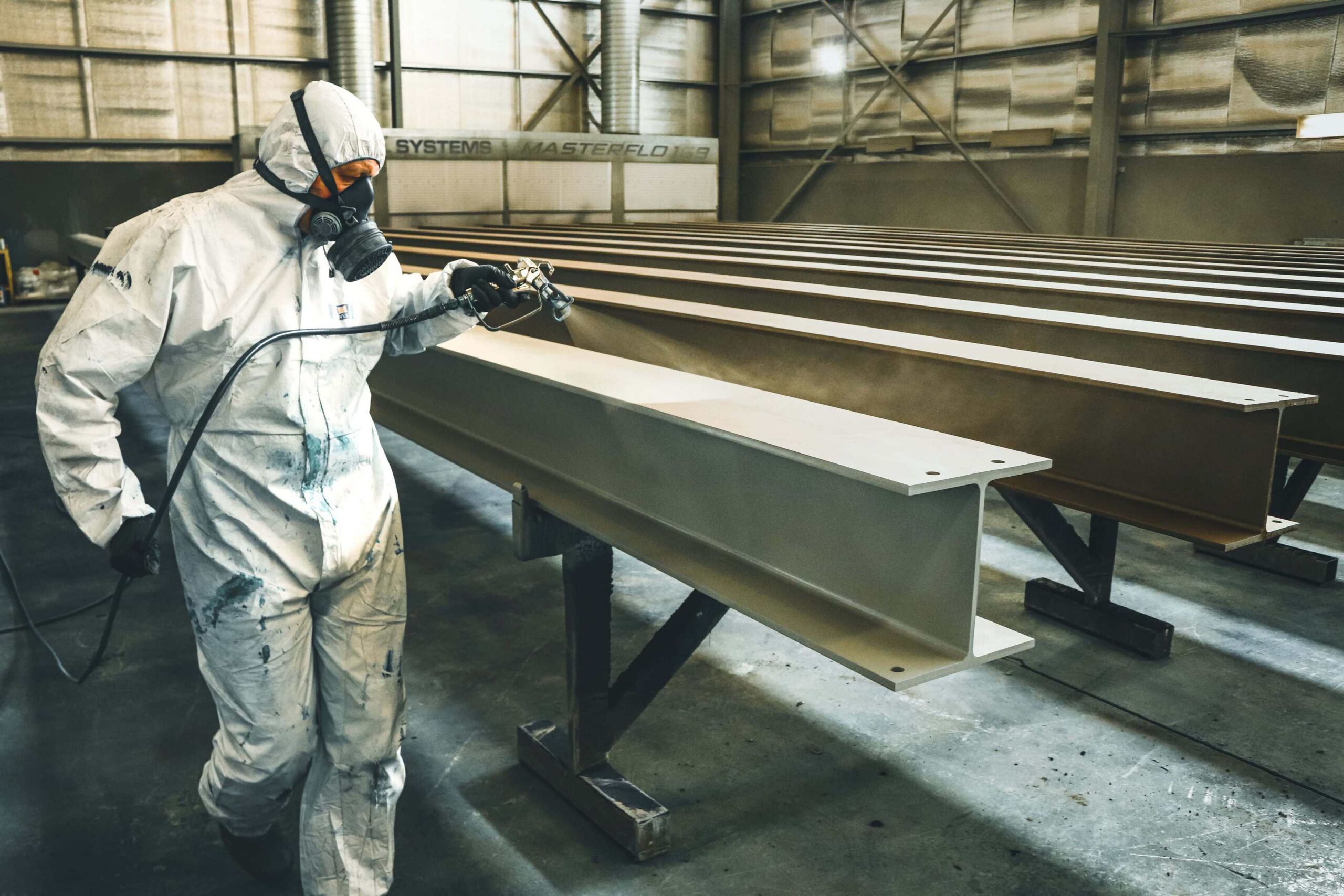
Midsouth Mechanical’s in-house steel fabrication team builds machine guards to fit the actual equipment, not a catalog approximation. That includes guards for conveyors, presses, robotics, packaging lines, and processing equipment across a range of industries. Every guard is built to OSHA 29 CFR 1910.212 general machine guarding standards and designed with maintenance access in mind — because a guard that gets removed for every PM and never put back is a compliance problem waiting to happen.
For facilities running food processing or pharmaceutical lines, guards also need to meet sanitary design requirements. Material selection, weld finish, and drainage considerations are part of the fabrication spec, not an afterthought.
The Advantage of a Fabrication Team That Also Installs
Machine guarding projects that split fabrication and installation between two contractors introduce a predictable failure point: the guard arrives and doesn’t fit the way the equipment actually sits in the field. Dimensions that looked correct on paper don’t account for existing structure, clearance constraints, or how the machine was actually positioned during install.
Midsouth Mechanical fabricates and installs. The same team that builds the guard knows what the installation requires, which means fewer field modifications, less downtime during the changeover, and a finished result that holds up to both an OSHA walkthrough and daily production. With 35+ years of mechanical contracting experience and ISNetworld A-rated safety credentials, Midsouth works across manufacturing environments throughout the Southeast.
If your facility has a machine guarding backlog — new equipment, aging guards on legacy machines, or a recent audit finding — contact our team to discuss a fabrication and installation scope. For food and beverage facilities with sanitary requirements, we can build to your spec or work from the hazard assessment directly.
Our team is here to help.
Contact a project manager today!